All Categories
Featured
Table of Contents
- – Instant Air Solutions
- – What Is Restaurant Hood Cleaning and Why Do Re...
- – How Often Should Restaurant Hoods Be Cleaned A...
- – What Is the Average Cost of Restaurant Hood Cl...
- – The Professional Restaurant Hood Cleaning Proc...
- – Signs Your Restaurant Hood System Needs Cleani...
- – Benefits of Hiring Certified Restaurant Hood C...
- – Common Mistakes Restaurants Make with Kitchen ...
- – Common Concerns About Restaurant Hood Cleaning...
- – Areas We Serve Throughout Los Angeles, San Fer...
- – Frequently Asked Questions About Restaurant Ho...
- – We Can Help! Contact Us Today.
- – Instant Air Solutions

Restaurant hood cleaning remains one of the most vital maintenance tasks any Southern California commercial kitchen must prioritize to eliminate hazardous grease accumulation from hoods, ducts, fans, and exhaust pathways. Restaurant operators constantly look for reliable restaurant hood cleaning near me, accurate information on how often should restaurant hoods be cleaned, realistic commercial kitchen hood cleaning cost estimates in areas such as Los Angeles, San Fernando Valley, Pasadena, and Orange County, and trustworthy providers of comprehensive kitchen hood services for restaurants. This in-depth resource examines every essential aspect—from the serious dangers posed by unchecked grease deposits and strict NFPA 96 mandates to the complete step-by-step professional cleaning procedure, recommended service intervals, warning signs indicating immediate attention is required, typical pricing structures, key advantages of expert service, frequent errors facility managers make, typical owner concerns with practical resolutions, and wide regional coverage across Southern California communities.
Grease vapors produced during high-temperature cooking rise continuously into the ventilation system. Once they cool and condense, they create thick, highly flammable layers that threaten both property and lives if ignored (Hood Vent Cleaning Services Pacoima). Consistent, thorough restaurant hood cleaning not only drastically lowers fire probability but also enhances airflow, decreases energy consumption, controls persistent kitchen odors, and extends the operational life of costly exhaust components. Many facilities discover that investing in routine professional service yields substantial long-term savings through avoided emergency downtime, reduced insurance premiums, and smoother regulatory inspections
What Is Restaurant Hood Cleaning and Why Do Restaurants Need It?
Restaurant hood cleaning consists of systematically eliminating grease, carbon residues, oil films, and particulate matter from every section of the commercial kitchen exhaust assembly. The process covers the hood canopy, baffle filters, grease troughs, vertical and horizontal ducts, access doors, exhaust fans, and rooftop discharge units. During intense cooking activities, grease vapors ascend and solidify on internal surfaces, forming combustible accumulations that pose severe fire threats when left unattended.
According to authoritative guidance from the National Fire Protection Association, cooking-related fires frequently originate from grease deposits inside ventilation pathways. These events cause extensive property loss and endanger lives across food service establishments. In the high-demand restaurant environments throughout Southern California, where operations run near major transportation routes, neglected buildup additionally restricts airflow, elevates utility expenses, generates lingering smells, and accelerates wear on mechanical components. Professional restaurant hood cleaning fully restores optimal system function, significantly improves indoor environmental quality, lowers monthly energy expenditures, and substantially decreases the likelihood of catastrophic incidents. Certified teams employ advanced degreasing agents, pressure washing equipment, scraping implements, and containment protocols to restore surfaces to bare-metal condition. Ongoing service promotes healthier conditions for kitchen personnel, better odor management, and stronger adherence to health department and fire authority expectations. A properly maintained exhaust pathway supports consistent cooking performance, reduces equipment strain, and contributes to overall facility reliability.
A thorough restaurant hood cleaning removes all combustible contaminants from the complete exhaust route, dramatically reducing fire potential while optimizing operational performance. Ready for safer, cleaner ventilation? Contact local experts for a complimentary consultation. Explore our HVAC maintenance offerings for additional system care.
How Often Should Restaurant Hoods Be Cleaned According to NFPA 96?
NFPA 96 establishes the authoritative benchmark for ventilation safety and fire prevention in food service facilities. It mandates that hoods, grease capture devices, ductwork, fans, and related components receive cleaning down to bare metal before excessive contamination develops. Service intervals vary according to cooking intensity and volume—establishments with continuous or very high-volume operations generally require monthly attention, typical restaurants follow quarterly schedules, and lower-volume facilities may extend to semi-annual or annual cycles.
Authorities in California enforce these standards, occasionally imposing stricter timelines depending on observed conditions or specialized cooking techniques. Postponing required cleanings frequently results in penalties, inspection failures, operational suspensions, and increased insurance exposure. Maintaining the proper cadence safeguards against regulatory problems while upholding continuous protection for employees and guests. For deeper insights into system care, review our commercial HVAC services.
Adhering to the appropriate schedule keeps your restaurant compliant and safe year-round. Unsure about your restaurant’s schedule? Reach out for a personalized frequency review. Discover more about kitchen hood services tailored for compliance.
What Is the Average Cost of Restaurant Hood Cleaning in Los Angeles and Orange County?
Commercial kitchen hood cleaning cost fluctuates based on multiple variables including overall system scale, total ductwork length, degree of grease saturation, rooftop access challenges, and supplementary tasks such as filter renewal or small repair work. Within Los Angeles and Orange County markets, standard comprehensive cleanings normally fall between $400 and $1,500, with premium rates applying to oversized or exceptionally grease-heavy configurations.
Primary cost drivers encompass facility square footage, daily cooking intensity, structural access limitations, and inclusion of photographic verification or component servicing. Although initial investment appears substantial, neglecting routine service commonly generates much larger financial burdens via escalated insurance rates, urgent breakdown expenses, revenue loss during closures, or regulatory sanctions. Transparent, all-inclusive pricing combined with complete coverage yields excellent value over time. Request a complimentary on-site estimate today for precise figures tailored to your setup. Learn about related HVAC installation options that complement hood maintenance.
The Professional Restaurant Hood Cleaning Process Step by Step
Expert restaurant hood cleaning proceeds through a carefully structured, safety-oriented workflow designed to achieve total system restoration. Initial evaluation examines contamination extent, potential hazards, and optimal access strategies. Preparation follows, involving protective coverings, pilot light deactivation, and waste containment setup to safeguard surrounding areas.
Core cleaning applies powerful degreasers, mechanical scraping, and pressurized hot water to eliminate deposits from canopy surfaces, filters, internal ductwork, fan assemblies, and rooftop exhaust outlets. Technicians work methodically until every accessible surface reaches bare-metal condition. Safe collection and disposal of removed materials occurs in accordance with environmental regulations.
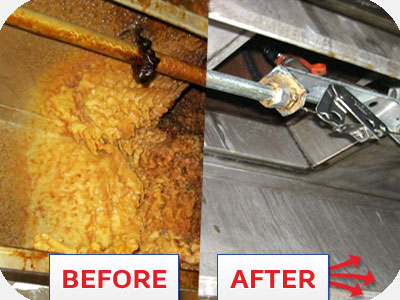
Completion includes reassembly, operational verification of airflow, and provision of comprehensive photographic records showing before-and-after conditions. This documentation proves invaluable during regulatory reviews and insurance verifications. Want to see how a complete process protects your restaurant? Let’s talk. Check our garage ventilation solutions for additional air quality improvements.
Signs Your Restaurant Hood System Needs Cleaning Right Now
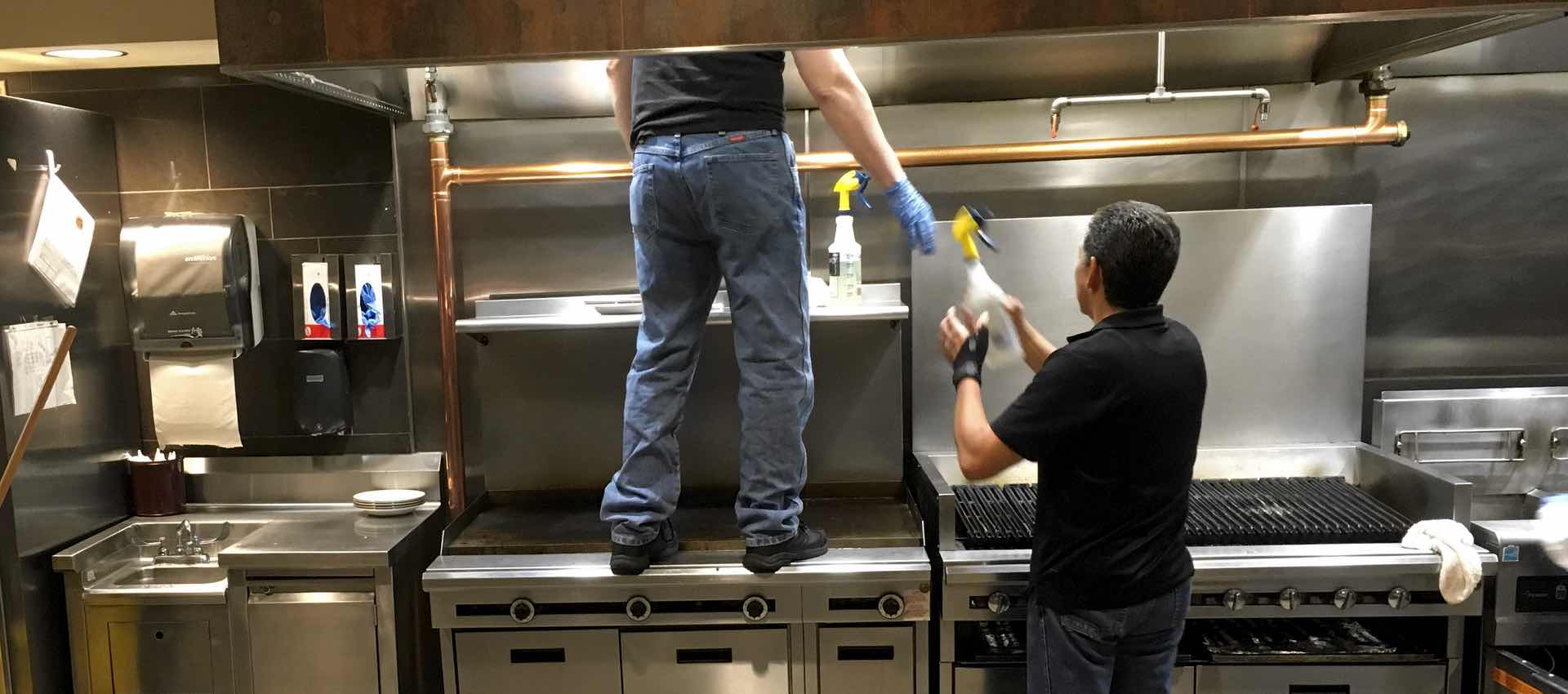
Multiple unmistakable indicators reveal when immediate restaurant hood cleaning becomes necessary. Prominent grease drips along filters or canopy borders, persistent smoke accumulation within the workspace, and stubborn odors persisting despite running exhaust fans all signal advanced contamination. Diminished airflow leading to sluggish heat extraction or employee discomfort constitutes another urgent warning.
Repeated filter blockages necessitate constant replacements and place excessive load on blower motors, while climbing energy bills frequently stem from obstructed ventilation pathways. Recent unsatisfactory outcomes from health department or fire authority inspections almost invariably connect to neglected systems. Early recognition of these symptoms permits prompt corrective measures that avert major interruptions and maintain peak performance. If your kitchen shows any of these signs, professional help is the smartest next step—get in touch. See how our residential HVAC expertise complements commercial needs.
Benefits of Hiring Certified Restaurant Hood Cleaning Experts
Certified specialists deliver assured NFPA 96 adherence, supply thorough photographic evidence for regulatory bodies and insurers, and yield substantially decreased fire exposure combined with superior air quality and reduced operational expenses. One Los Angeles restaurant manager stated: “Transitioning to certified professionals simplified our inspections and noticeably lowered monthly utility costs.” A Pasadena owner added: “The detailed photo documentation provided invaluable reassurance during our insurance renewal process.” Expert intervention converts regulatory obligations into strategic advantages, delivering authentic relief and operational confidence. For more on system reliability, visit our about page.
Common Mistakes Restaurants Make with Kitchen Exhaust Maintenance
Numerous facilities restrict attention to easily visible surfaces, neglecting concealed duct sections, blower assemblies, and rooftop discharge points where the majority of hazardous deposits concentrate. Others defer required maintenance until regulatory visits approach, inviting violations and frantic last-minute corrections. Attempting in-house cleaning without appropriate tools, training, or safety protocols typically results in incomplete results and persistent risks. Steering clear of these frequent oversights through qualified service guarantees dependable protection and performance consistency. Explore our swamp cooler. Hood Vent Cleaning Services Pacoima maintenance for complementary cooling solutions
Common Concerns About Restaurant Hood Cleaning And How They Are Solved
Facility managers commonly express apprehension regarding service-related interruptions—established providers arrange off-peak scheduling to preserve uninterrupted business activity. Questions about cost-effectiveness diminish when weighed against prevented penalties, repair bills, and lost revenue. Assurance of complete execution comes through exhaustive photographic verification and official documentation. These practical resolutions render the entire experience efficient and worry-free for demanding operators. Contact us at our contact page for personalized answers.
Areas We Serve Throughout Los Angeles, San Fernando Valley, Pasadena, Orange County California
Specialized restaurant hood cleaning coverage reaches communities including Long Beach, Torrance, Glendale, Burbank, Santa Clarita, Pasadena, Diamond Bar, Irvine, Anaheim, and many additional locations spanning Los Angeles County and Orange County. Strategic positioning near key transportation routes facilitates prompt response across the region.
Instant Air Solutions, located at 412 W Dryden St APT 6, Glendale, CA 91202, phone (747) 307-6363, delivers dedicated expertise throughout these extensive service territories. For full details on our reach, see our homepage.
Frequently Asked Questions About Restaurant Hood Cleaning
How often should restaurant hoods be cleaned?
NFPA 96 guidelines establish frequency according to cooking intensity—monthly for high-volume or solid-fuel setups, quarterly for typical operations, and less frequently for low-volume facilities. California local requirements may impose tighter intervals. Regular adherence prevents dangerous accumulation and maintains regulatory standing. Learn more about maintenance schedules on our HVAC maintenance page. (112 words)
What does NFPA 96 require for commercial kitchens?
NFPA 96 demands complete exhaust system cleaning to bare metal prior to heavy grease contamination, specifying trained technicians, proper documentation, and usage-based intervals. Compliance significantly lowers fire probability and satisfies insurance and inspection criteria. Visit our kitchen hood services for compliant solutions. (98 words)
How much does restaurant hood cleaning cost in Southern California?
Pricing usually spans $400 to $1,500+ depending on system dimensions, contamination severity, duct complexity, and extras. Professional execution prevents costlier emergency or penalty expenses. Check our commercial services for detailed pricing information. (78 words)
Do you provide documentation for inspectors?
Yes—comprehensive photo documentation featuring timestamped before-and-after views of all sections meets requirements from fire officials, health departments, and insurers. This verification confirms thorough compliance. See our about page for more on our documentation standards. (82 words)
Can cleaning be scheduled after hours?
Yes—flexible after-hours arrangements reduce interference with busy service periods while maintaining full operational continuity. Schedule easily through our contact page. (62 words)
What are the signs that my hood needs cleaning?
Grease drips, lingering smoke, persistent odors, reduced airflow, frequent filter issues, and elevated utility costs indicate urgent service need. Early recognition avoids emergencies. Explore our HVAC installation solutions for system upgrades. (88 words)
Is professional hood cleaning worth the investment?
Yes—regular professional service prevents costly fires, fines, repairs, and downtime while extending equipment life and improving efficiency. The long-term savings outweigh the expense. Learn about our swamp cooler services for additional cooling options. (92 words)
How does hood cleaning improve kitchen efficiency?
Cleaning restores unrestricted airflow, reduces energy consumption, eliminates odors, and extends component lifespan. Enhanced performance translates to lower bills and smoother operations. Check our residential services for home applications. (78 words)
What happens if I skip hood cleaning?
Neglecting service increases fire risk, invites penalties, raises insurance costs, causes equipment failure, and risks temporary closure. Consistent maintenance avoids these consequences. Visit our privacy policy for service details. (84 words)
Who should handle restaurant hood cleaning?
Certified professionals with proper equipment and training ensure complete, safe, and compliant results. Avoid DIY risks with expert service. Contact us via our contact page for certified assistance. (76 words)
Restaurant hood cleaning generates substantial return on investment by eliminating fire threats, preventing regulatory penalties, lowering insurance expenses, and prolonging expensive equipment life. Operators who maintain consistent service enjoy markedly reduced stress, superior safety compliance records, and a secure environment for employees and patrons. The anxiety associated with potential disasters recedes, supplanted by genuine relief and assurance in a fully protected kitchen.
Instant Air Solutions provides certified knowledge and a satisfaction guarantee on every assignment. We fully recognize the emotional pressures inherent in restaurant management alongside the logical imperative for dependable outcomes that preserve profitability. Selecting seasoned local specialists produces reliable, profitable benefits—superior air quality, safer routine performance, and significantly diminished concern.
We Can Help! Contact Us Today.
If you seek professional restaurant hood cleaning in California, Instant Air Solutions stands ready as your trusted partner. Our certified experts focus on restaurant hood cleaning and related services, providing fast, reliable results. Whether you operate a bustling restaurant, manage a chain, or oversee a commercial kitchen, we deliver precision and care. Conveniently located near major corridors in Glendale, we serve Los Angeles, San Fernando Valley, Pasadena, Orange County, and surrounding areas. A complimentary consultation and on-site estimate are available. With proven expertise and a Satisfaction Guarantee, we ensure your kitchen remains safe and efficient. Let Instant Air Solutions enhance your safety and performance with confidence!
Call (747) 307-6363 or visit our contact page to request your estimate today.
Instant Air Solutions
Address: 412 W Dryden St Apt 6 Glendale, CA 91202Phone: (747) 307-6363
Email: [email protected]
Instant Air Solutions
Restaurant Hood Cleaning Near Me Pacoima, CA
Kitchen Hood Grease Removal Pacoima, CA
Restaurant Hood Cleaning Near Me Pacoima, CA
Restaurant Ventilation Cleaning Pacoima, CA
Kitchen Hood Repair Service Pacoima, CA
Commercial Kitchen Hood Service Pacoima, CA
Restaurant Hood Cleaning Service Pacoima, CA
Restaurant Hood Cleaning Service Pacoima, CA
Restaurant Hood Installation Pacoima, CA
Commercial Kitchen Hood Installation Pacoima, CA
Commercial Kitchen Hood Cleaning Pacoima, CA
Hood Cleaning Companies Pacoima, CA
Commercial Kitchen Hood Service Pacoima, CA
Professional Hood And Duct Cleaning Pacoima, CA
Commercial Kitchen Ventilation Pacoima, CA
Fire Suppression System Certification Pacoima, CA
Hood Filter Replacement Pacoima, CA
Restaurant Ventilation Cleaning Pacoima, CA
Commercial Kitchen Hood Cleaning Pacoima, CA
Kitchen Exhaust Fan Motor Replacement Pacoima, CA
Kitchen Hood Maintenance Pacoima, CA
Commercial Kitchen Hood Installation Pacoima, CA
Restaurant Ventilation Cleaning Pacoima, CA
Kitchen Hood Inspection Pacoima, CA
Kitchen Hood Repair Service Pacoima, CA
Kitchen Hood Maintenance Pacoima, CA
Restaurant Hood Cleaning Near Me Pacoima, CA
Commercial Kitchen Hood Installation Pacoima, CA
Kitchen Hood Maintenance Pacoima, CA
Kitchen Exhaust Fan Motor Replacement Pacoima, CA
Hood Cleaning Companies Pacoima, CA
Commercial Kitchen Hood Cleaning Pacoima, CA
Kitchen Hood Repair Service Pacoima, CA
Finding A Local Seo Pricing Pacoima, CA
Around Here Seo Companies Pacoima, CA
Instant Air Solutions
Kitchen Exhaust Cleaning Pacoima, CA
Commercial Hood Installation Pacoima, CA

Table of Contents
- – Instant Air Solutions
- – What Is Restaurant Hood Cleaning and Why Do Re...
- – How Often Should Restaurant Hoods Be Cleaned A...
- – What Is the Average Cost of Restaurant Hood Cl...
- – The Professional Restaurant Hood Cleaning Proc...
- – Signs Your Restaurant Hood System Needs Cleani...
- – Benefits of Hiring Certified Restaurant Hood C...
- – Common Mistakes Restaurants Make with Kitchen ...
- – Common Concerns About Restaurant Hood Cleaning...
- – Areas We Serve Throughout Los Angeles, San Fer...
- – Frequently Asked Questions About Restaurant Ho...
- – We Can Help! Contact Us Today.
- – Instant Air Solutions
Latest Posts
San Dimas Web Designers
Web Design Firm Walnut
Internet Marketing For Contractors West Covina
More
Latest Posts
San Dimas Web Designers
Web Design Firm Walnut
Internet Marketing For Contractors West Covina