All Categories
Featured
Table of Contents
- – Landscape Designers In My Area Norwalk, CA
- – Pacific Green Landscape Maintenance
- – Construction Landscaping Norwalk, CA
- – Design Landscaping Norwalk, CA
- – Front House Landscaping Norwalk, CA
- – Landscape Design Company Norwalk, CA
- – Landscape Design And Construction Norwalk, CA
- – Design Landscape Norwalk, CA
- – Landscape And Design Norwalk, CA
- – Landscaping Designers Norwalk, CA
- – Landscape Design And Construction Norwalk, CA
- – Yard Design Norwalk, CA
- – Landscape Designers In My Area Norwalk, CA
- – Landscape Design Companies Norwalk, CA
- – Pacific Green Landscape Maintenance
Landscape Designers In My Area Norwalk, CA
Pacific Green Landscape Maintenance
6530 Whittier Ave Whittier, CA 90601-3919(562) 203-3567
Pacific Green Landscape Maintenance
Mulch covers the dirt and prevents crusting, compaction, and water evaporation. Compost covers the soil and prevents crusting, compaction, and water dissipation.
With less weeds, less growing is called for, which can prevent damage to plant origins, soil structure, and dirt organisms. In enhancement, mulch moderates soil temperature level and secures plant origins.
Organic composts include materials such as timber or bark chips, shredded bark, nut coverings, want needles, or other thrown out plant components. These products have the prospective to enhance dirt framework, boost soil fertility, protect against compaction, and increase soil organic matter as they damage down and are incorporated right into the soil.
To make sure appropriate water infiltration and aeration and to slow decomposition, make certain mulch fragments are bigger than the underlying dirt particles (normally bigger than a half inch in diameter). Recycled plant products should be without weed seeds, disease-causing microorganisms, and pesticide and herbicide deposits. You can either use healthsome plant parts that have not been chemically treated, or you can compost your compost before usage.
Construction Landscaping Norwalk, CA
Nitrogen loss can be stayed clear of by using composted compost or by adding nitrogen at a rate of 1-2 pounds actual N per 1000 ft2. With time, organic composts break down and will need to be renewed. Replenishment can be completed just by adding more mulch over the top of the broken down compost material.
The decision regarding which to make use of will certainly rely on the type of landscape, the reason for its usage, and its accessibility. Instances consist of gravel or smashed rock, lava rock, recycled rolled glass, and cobblestones of various sizes, forms, and shades. The size of inorganic mulch fragments need to match the range of the landscape.
Design Landscaping Norwalk, CA
A 2-inch thick layer of compost requires regarding 6 cubic backyards of product per 1000 square feet of area. Leave a couple of inches of mulch-free area around the base of woody plants to stop origin collar conditions and rodent damage. The very best time to apply compost is quickly after planting in the loss, or in the spring after the soil has warmed.
In addition to conserving water, correct irrigation can encourage deeper origin development and healthier, much more dry spell forgiving landscapes. An essential element of water-efficient landscaping is creating hydrozones for your watering requires. To offer ample water to all plants without over or under-watering some, team plants with comparable watering needs in one zone.
Front House Landscaping Norwalk, CA
Another essential facet of irrigation preparation includes regular maintenance of the system. Month-to-month examination of the irrigation system, while being used, will assist you to locate and repair any kind of broken, misaligned, or blocked sprinkler heads and keep your system running efficiently. Drip Irrigation systems includes plastic pipes with emitters that deliver water directly to plants.
Plan and layout irrigation systems so that turfgrass areas are irrigated individually from various other landscape plants. There are several sources available to determine the appropriate watering schedule for grass areas in Utah. from the Utah Department of Water Resources from the Utah Department of Water Resources Trees and bushes have much deeper and extra comprehensive root systems than turfgrass so they must be sprinkled much less often but also for longer time periods.
The quantity of water to apply in any kind of circumstance depends on the soil type. Sandy soils absorb water the fastest (about 2" per hour), complied with by loam soils (3/4" per hour).
Landscape Design Company Norwalk, CA
By allowing water to pass through deeper right into the dirt profile, you are urging deeper rooting and a more drought tolerant plant. Frequent, light watering will certainly bring about plants that have a shallow root system and that are a lot more vulnerable to water anxiety. When using lawn sprinkler systems concerning 1/2 -1 inch of water may be needed weekly for hedges and smaller sized trees (
For this factor, it is a good concept to have your soil tested prior to installing landscape plants. Changing soils with composted organic issue prior to planting will certainly enhance the fertility of your soil.
Landscape Design And Construction Norwalk, CA
Plants in sandy soils may require much more constant fertilization than plants in fertile or clay soils. Soils that are alkaline (high pH) might bind essential nutrients and make them unavailable. Green Landscaping Company Norwalk. A soil examination will certainly offer this details and make suggestions for changing the dirt. An option to dirt change is to select plants that are adapted to these problems.
Withholding water or nutrients will certainly keep growth of this types in check. Artemisia cana (Silver Sage) Buddleia davidii (Butterfly Shrub) Ceratoides lanata (Winterfat) Chamaebatiaria millefolium (Fernbush) (occasionally to invigorate) Chrysothamnus nauseosus (Rubber Rabbitbrush) Cornus sericea (Red-trig Dogwood) Caryopteris x clandonensis (Blue Mist Spirea) Cercocarpus ledifolius (Curl-leaf Mountain Mahogany) Fallugia paradoxa (Apache Plume) (periodically to rejuvenate) Kolkwitzia amabilis (Beauty Bush) (after flower) Lavandula angustifolia (English Lavender) (approximately 2/3 of plant) Mahonia fremontii (Fremont Holly) (sometimes to rejuventate) Potentilla fruticosa (Shrubby Cinquefoil) (sometimes to invigorate) Prunus virginiana (Chokecherry) Symphoricarpos oreophilus (Mountain Snowberry) is a means to regulate development on trees and hedges.
As an example, most deciduous hedges (hedges that drop their leaves in autumn) benefit from thinning cuts that open their canopy and remove old or completing stems. Thinning cuts are made by reducing a branch back to its point of beginning. The factor of beginning could be one more branch or the major trunk, or maybe near the ground
Design Landscape Norwalk, CA
A heading cut is much more extreme than a thinning cut, and gets rid of part of a branch leaving a brief stub above a bud. This kind of cut boosts a profusion of twiggy development from a lateral bud simply below the cut. It is used to boost new development from a lateral bud to load in a space in the cover, or to raise blossom manufacturing in some hedges.
Shearing is the most severe type of heading cut and entails reducing a plant's external vegetation to produce an also surface area. Shearing can be used to create a bush or screen with carefully spaced plants.
For this factor, it is an excellent idea to have your soil checked prior to mounting landscape plants. Changing dirts with composted natural issue prior to planting will certainly boost the fertility of your dirt.
Plants in sandy soils may require much more regular fertilization than plants in fertile or clay dirts. Soils that are alkaline (high pH) may bind essential nutrients and make them inaccessible. A soil test will certainly offer this info and make recommendations for modifying the dirt. An alternative to soil modification is to select plants that are adjusted to these conditions.
Landscape And Design Norwalk, CA

Withholding water or nutrients will maintain development of this species in check. Artemisia cana (Silver Sage) Buddleia davidii (Butterfly Shrub) Ceratoides lanata (Winterfat) Chamaebatiaria millefolium (Fernbush) (sometimes to rejuvenate) Chrysothamnus nauseosus (Rubber Rabbitbrush) Cornus sericea (Red-trig Dogwood) Caryopteris x clandonensis (Blue Haze Spirea) Cercocarpus ledifolius (Curl-leaf Hill Mahogany) Fallugia paradoxa (Apache Plume) (periodically to revitalize) Kolkwitzia amabilis (Beauty Shrub) (after blossom) Lavandula angustifolia (English Lavender) (approximately 2/3 of plant) Mahonia fremontii (Fremont Holly) (sometimes to rejuventate) Potentilla fruticosa (Shrubby Cinquefoil) (sometimes to rejuvenate) Prunus virginiana (Chokecherry) Symphoricarpos oreophilus (Mountain Snowberry) is a way to control growth on trees and shrubs.
For example, most deciduous bushes (shrubs that drop their leaves in fall) gain from thinning cuts that open their canopy and get rid of old or contending stems. Thinning cuts are made by reducing a branch back to its factor of beginning. The point of origin can be one more branch or the major trunk, or it might be near the ground.
Landscaping Designers Norwalk, CA
A heading cut is much more severe than a thinning cut, and gets rid of part of a branch leaving a short stub over a bud. This type of cut promotes a profusion of twiggy development from a side bud simply listed below the cut. It is utilized to stimulate brand-new growth from a side bud to complete a gap in the cover, or to boost blossom production in some hedges.
Shearing is the most serious type of heading cut and involves reducing a plant's external vegetation to produce an even surface area. Shearing can be utilized to produce a bush or display with very closely spaced plants.
For this factor, it is a great idea to have your dirt checked prior to installing landscape plants. Changing soils with composted natural issue prior to growing will boost the fertility of your soil.

Plants in sandy soils may need much more constant fertilization than plants in loamy or clay dirts. An option to soil change is to pick plants that are adapted to these problems.
Landscape Design And Construction Norwalk, CA
Withholding water or nutrients will keep growth of this types in check. Artemisia cana (Silver Sage) Buddleia davidii (Butterfly Bush) Ceratoides lanata (Winterfat) Chamaebatiaria millefolium (Fernbush) (sometimes to rejuvenate) Chrysothamnus nauseosus (Rubber Rabbitbrush) Cornus sericea (Red-trig Dogwood) Caryopteris x clandonensis (Blue Haze Spirea) Cercocarpus ledifolius (Curl-leaf Mountain Mahogany) Fallugia paradoxa (Apache Plume) (sometimes to invigorate) Kolkwitzia amabilis (Beauty Bush) (after flower) Lavandula angustifolia (English Lavender) (up to 2/3 of plant) Mahonia fremontii (Fremont Holly) (occasionally to rejuventate) Potentilla fruticosa (Shrubby Cinquefoil) (sometimes to revitalize) Prunus virginiana (Chokecherry) Symphoricarpos oreophilus (Mountain Snowberry) is a method to regulate development on trees and bushes.
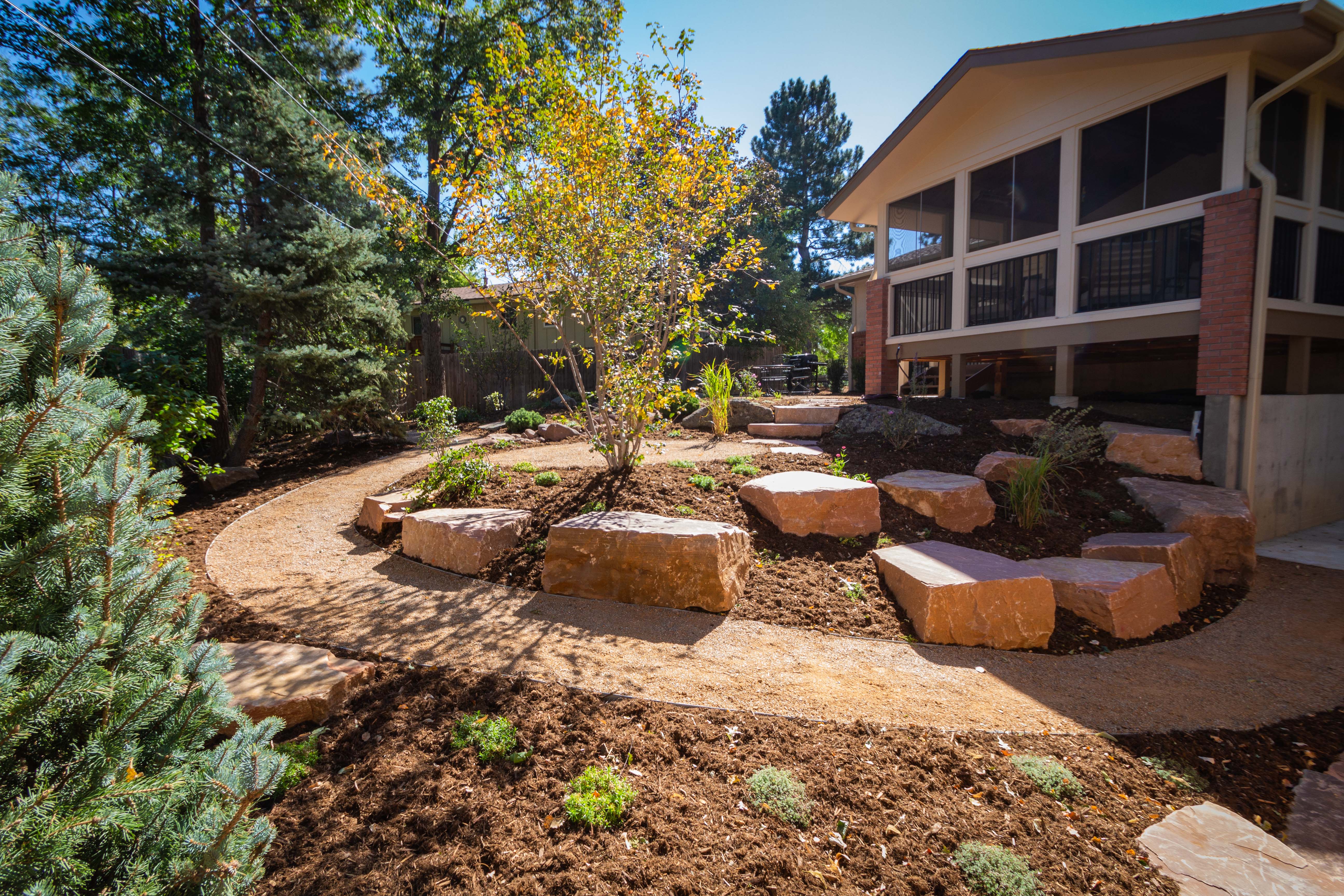
The majority of deciduous shrubs (shrubs that drop their leaves in loss) benefit from thinning cuts that open up their cover and get rid of old or competing stems. Thinning cuts are made by cutting a branch back to its factor of origin. The factor of origin can be an additional branch or the main trunk, or it might be near the ground.
A heading cut is a lot more severe than a thinning cut, and eliminates part of a branch leaving a brief stub above a bud. This kind of cut boosts a profusion of twiggy growth from a side bud just below the cut. It is utilized to boost brand-new development from a side bud to complete a gap in the canopy, or to raise blossom production in some hedges.
Shearing is the most severe type of heading cut and involves cutting a plant's outer foliage to create an also surface area. Shearing can be utilized to produce a bush or display with carefully spaced plants.
Yard Design Norwalk, CA
For this reason, it is a good idea to have your dirt examined prior to mounting landscape plants. Modifying dirts with composted organic issue prior to growing will certainly improve the fertility of your soil.
Plants in sandy soils might need more regular fertilizing than plants in loamy or clay soils. An alternative to soil modification is to pick plants that are adjusted to these problems.
Landscape Designers In My Area Norwalk, CA
Withholding water or nutrients will certainly keep growth of this types in check. Artemisia cana (Silver Sage) Buddleia davidii (Butterfly Bush) Ceratoides lanata (Winterfat) Chamaebatiaria millefolium (Fernbush) (occasionally to rejuvenate) Chrysothamnus nauseosus (Rubber Rabbitbrush) Cornus sericea (Red-trig Dogwood) Caryopteris x clandonensis (Blue Mist Spirea) Cercocarpus ledifolius (Curl-leaf Mountain Mahogany) Fallugia paradoxa (Apache Plume) (sometimes to renew) Kolkwitzia amabilis (Appeal Bush) (after blossom) Lavandula angustifolia (English Lavender) (up to 2/3 of plant) Mahonia fremontii (Fremont Holly) (sometimes to rejuventate) Potentilla fruticosa (Shrubby Cinquefoil) (occasionally to invigorate) Prunus virginiana (Chokecherry) Symphoricarpos oreophilus (Hill Snowberry) is a method to regulate development on trees and shrubs.
As an example, the majority of deciduous shrubs (shrubs that drop their fallen leaves in fall) gain from thinning cuts that open their canopy and remove old or contending stems. Thinning cuts are made by cutting a branch back to its point of beginning. The point of beginning can be one more branch or the major trunk, or maybe near the ground.
A heading cut is much more serious than a thinning cut, and removes component of a branch leaving a short stub over a bud. This kind of cut stimulates a wealth of twiggy development from a side bud simply below the cut. It is made use of to promote brand-new growth from a lateral bud to load in a gap in the cover, or to boost flower manufacturing in some bushes.
Landscape Design Companies Norwalk, CA
Pacific Green Landscape Maintenance
Address: 6530 Whittier Ave Whittier, CA 90601-3919Phone: (562) 203-3567
Email: [email protected]
Pacific Green Landscape Maintenance
Overuse of heading cuts can wreck the natural shape of a tree or bush. Shearing is the most extreme kind of heading cut and includes cutting a plant's external foliage to produce an also surface. Just certain trees and shrubs will certainly take advantage of this kind of cut. Shearing can be used to produce a hedge or display with closely spaced plants.
Landscape Companys Norwalk, CALandscape Design Installation Norwalk, CA
Design Landscape Norwalk, CA
Landscaping Designers Norwalk, CA
Landscape Designer Norwalk, CA
Green Landscaping Company Norwalk, CA
Design And Build Landscape Norwalk, CA
Landscape Designer Norwalk, CA
Drought Tolerant Landscape Design Norwalk, CA
Landscape Design Installation Norwalk, CA
Landscaping Design Company Norwalk, CA
Landscape Design And Installation Norwalk, CA
Design Landscape Norwalk, CA
Landscape Designer Norwalk, CA
Landscape And Design Norwalk, CA
Landscape Consultants Near Me Norwalk, CA
Landscape Designer Norwalk, CA
Landscape Consulting Norwalk, CA
Green Landscaping Company Norwalk, CA
Landscape Design Planner Norwalk, CA
Front House Landscaping Norwalk, CA
Drought Tolerant Landscape Design Norwalk, CA
Landscape And Design Norwalk, CA
Landscaping Designers Norwalk, CA
Landscape And Design Norwalk, CA
Landscape Design & Construction Norwalk, CA
Landscape Design Services Norwalk, CA
Landscape Designer Norwalk, CA
Landscape And Design Norwalk, CA
Local Landscape Designers Norwalk, CA
Landscaping Designers Norwalk, CA
Landscape Companies In California Norwalk, CA
Landscape Design Planner Norwalk, CA
Design And Build Landscape Norwalk, CA
Landscape Design And Construction Norwalk, CA
Green Landscaping Company Norwalk, CA
Landscape Designers Norwalk, CA
Local Landscape Designers Norwalk, CA
Landscape Design Services Norwalk, CA
Design And Build Landscape Norwalk, CA
Design Landscaping Norwalk, CA
Water Wise Landscaping Norwalk, CA
Landscape Design & Construction Norwalk, CA
Construction Landscaping Norwalk, CA
Construction Landscaping Norwalk, CA
Landscape Designers Norwalk, CA
Landscape And Design Norwalk, CA
Yard Design Norwalk, CA
Water Wise Landscaping Norwalk, CA
Construction Landscaping Norwalk, CA
Design And Build Landscape Norwalk, CA
Design Landscape Norwalk, CA
Landscape Design & Construction Norwalk, CA
Design Landscaping Norwalk, CA
Landscape Designers Norwalk, CA
Landscape Design And Installation Norwalk, CA
Landscape Design Services Norwalk, CA
Landscaping Design Company Norwalk, CA
Design And Build Landscape Norwalk, CA
Drought Tolerant Landscape Design Norwalk, CA
Water Wise Landscaping Norwalk, CA
Landscape Design Services Norwalk, CA
Design And Build Landscape Norwalk, CA
Close To Seo Services Pricing Norwalk, CA
Near Me Seo Marketing Norwalk, CA
Pacific Green Landscape Maintenance

Table of Contents
- – Landscape Designers In My Area Norwalk, CA
- – Pacific Green Landscape Maintenance
- – Construction Landscaping Norwalk, CA
- – Design Landscaping Norwalk, CA
- – Front House Landscaping Norwalk, CA
- – Landscape Design Company Norwalk, CA
- – Landscape Design And Construction Norwalk, CA
- – Design Landscape Norwalk, CA
- – Landscape And Design Norwalk, CA
- – Landscaping Designers Norwalk, CA
- – Landscape Design And Construction Norwalk, CA
- – Yard Design Norwalk, CA
- – Landscape Designers In My Area Norwalk, CA
- – Landscape Design Companies Norwalk, CA
- – Pacific Green Landscape Maintenance
Latest Posts
San Dimas Web Designers
Web Design Firm Walnut
Internet Marketing For Contractors West Covina
More
Latest Posts
San Dimas Web Designers
Web Design Firm Walnut
Internet Marketing For Contractors West Covina